
Santa Barbara · Generator Installation and Service
Whole House Generators
Permanently installed home standby generators that start themselves within seconds of an outage and run the house until the grid comes back.
Whole House Generators · Santa Barbara
What A Whole House Generator Covers
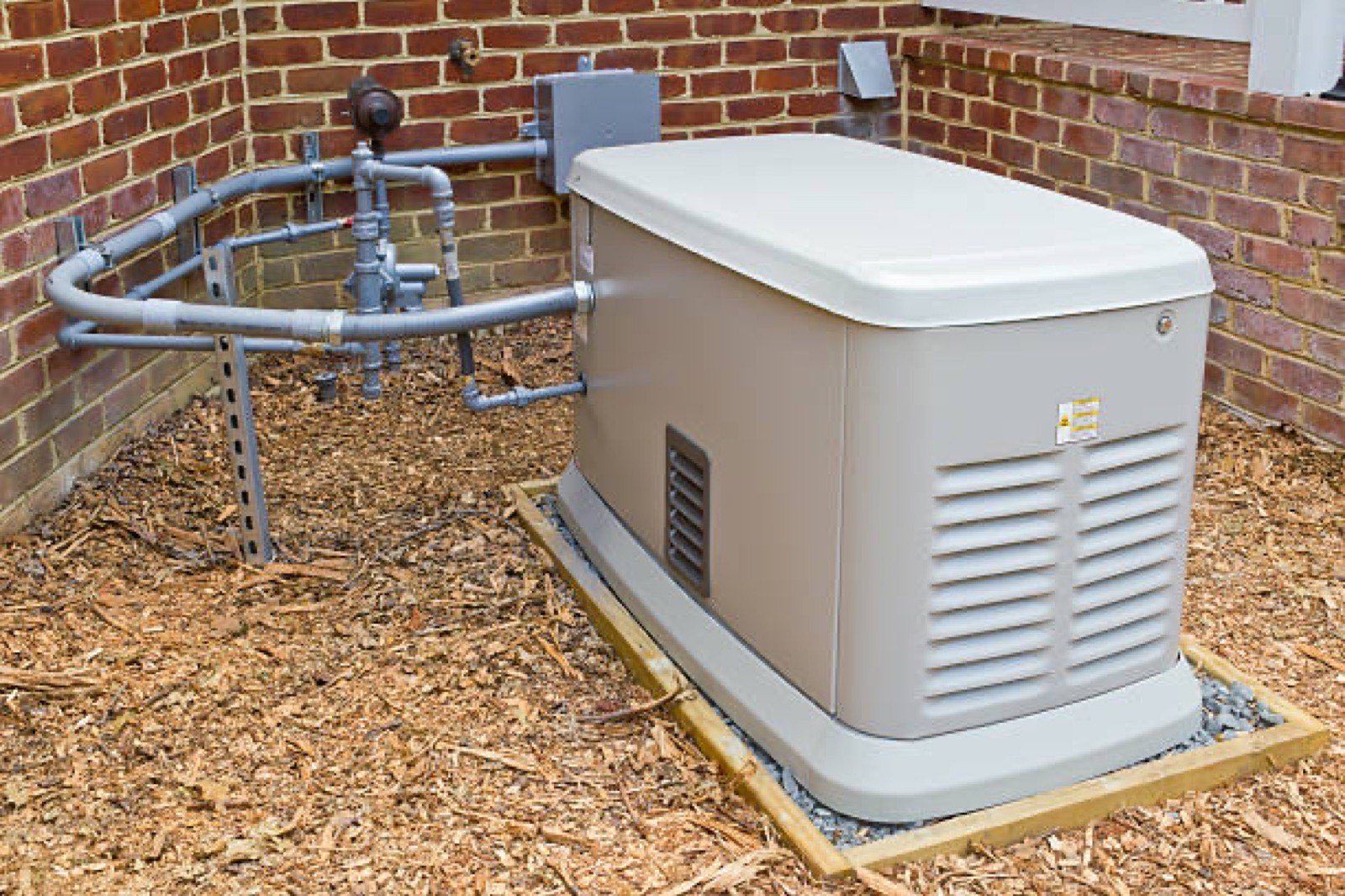
A whole house generator is a permanently installed unit that sits outside on its own pad, wired into your electrical panel through an automatic transfer switch, and fueled by natural gas or propane rather than by cans in the garage. When the utility drops, the transfer switch senses it, isolates the house from the grid, starts the engine and puts your circuits back on power. That whole sequence takes about ten to thirty seconds, it happens whether or not anyone is home, and it reverses itself when the utility returns. We install home standby generators from Generac, Kohler, Cummins and Champion across Santa Barbara County, from 14kW units covering a short list of essential circuits to 26kW and larger units carrying an entire home including air conditioning. What the unit needs to run is the conversation that decides everything else: the size, the fuel, the pad, the gas line and the price. On rural parcels where the load includes a well pump, that conversation usually ends somewhere larger than people expect, which is why we work it out on site rather than over a price list. If the property also has a shop, a barn or a second meter, it is often cheaper to treat that as its own backup power problem than to oversize one machine to carry everything.
Why Have Us Do The Install
A home standby install is four trades in a trench coat: an electrician for the panel and the transfer switch, a plumber for the gas, a concrete crew for the pad and a factory-trained technician for the commissioning. Most of the bad installs we get called out to fix went wrong because those four never spoke to each other. We do the whole thing in house, pull the permit ourselves, and hand you a system that has been load tested before we leave rather than one that has been started once and declared fine. We also size honestly. It is easier for us to sell a bigger unit, and a unit that spends its life at 40 percent load will outlast one that is pinned at 90, but there is a difference between headroom and selling somebody two sizes of machine they will never use. The same crew that installs it does the annual generator maintenance afterwards, so nobody has to explain the system to a stranger in year three.
- Licensed electrical contractor doing the panel work, the transfer switch and the gas connection as one job with one permit.
- Factory-trained on Generac, Kohler, Cummins and Champion, including warranty service, so the brand you buy is the brand we know.
- Load calculated from the actual house, including well pumps, air conditioning start-up current and any EV charger, not from the square footage.
- Permit pulled and inspection scheduled by us, with the gas and electrical sign-offs coordinated so you are not chasing two departments.
- Full load test and a walkthrough at commissioning, so you have seen it carry the house before you need it to.
- Annual service handled by the same crew, with parts on the shelf for the brands we install.
Reasons To Install A Whole House Generator
The reasons people finally do this are consistent, and they are rarely about convenience alone:
The property runs on a private well
A well pump without power means no drinking water, no irrigation and no pressure at the hose bibs, which matters a great deal in fire weather. Across the Santa Ynez Valley, Ojai and the rural parcels above Goleta, this is the single most common reason a homeowner stops putting the decision off.
Public safety power shutoffs are part of the calendar
When red flag conditions arrive, the utility de-energizes lines in high fire risk areas on purpose, and those shutoffs are measured in days rather than hours. A standby unit turns a planned multi-day outage into a background noise you stop noticing by the second afternoon.
Someone in the house depends on power
Oxygen concentrators, CPAP machines, refrigerated medication, mobility lifts and home dialysis do not pause for a storm. If a medical device is in the picture, the transfer switch matters more than the brand of the engine, because nobody should be dragging cords around at two in the morning.
The house is empty for stretches
Second homes and travel schedules are a good argument for automatic transfer. A freezer that quietly thaws in week one of a three-week trip is an expensive discovery, and a unit that starts itself is the only version of backup that helps when nobody is there to pull a cord.
Working from home means an outage costs money
Once a household income depends on a network connection, a day without power is a day of lost work rather than an inconvenience. This has become one of the more common reasons we get calls, and it usually only takes one bad week to settle the argument.
The alternative is a portable unit and extension cords
Portable generators kill people every year through carbon monoxide, and back-feeding a panel through a dryer outlet is both illegal and genuinely dangerous to line crews. If the current plan involves cords through a window, a permanent installation is the correct fix rather than an upgrade.
Tell us what the house has to keep running and roughly what you want to spend, and we will tell you what size unit that actually is. Call: (805) 572-7405
How A Whole House Install Works
Four visits from first call to a commissioned system, and most of the work happens before the equipment arrives.
1. Site visit and load calculation
We walk the property, open the panel, look at the gas meter, measure the run to the proposed location and talk through what has to stay live. You get a written quote with the unit size, the transfer switch type, the pad, the fuel work and the permit all in one number rather than a base price with surprises attached.
2. Permit and equipment order
We pull the electrical and mechanical permits with the city or the county and order the unit. Lead times vary by brand and size, and we will tell you the honest one rather than the optimistic one. On properties with design review or a fire district clearance, this is the stage where that gets sorted out.
3. Installation
Pad poured or composite pad set, unit placed and anchored, gas line run and pressure tested, transfer switch installed at the panel, conductors pulled and terminated. Most residential installs are one to two days on site once the pad has cured, and we leave the site clean at the end of each one.
4. Inspection, commissioning and handover
The inspector signs off, then we commission the unit: fuel pressure checked under load, transfer tested by pulling utility power for real, exercise schedule set, and the whole thing run under the actual house load. Then we walk you through it, register the warranty and book the first service.
Sizes, Brands, Fuel And Transfer Switches
The decisions that go into a home standby system, in the order they usually come up:
Sizing the unit to the house
A 2,000 square foot home with gas heat and one air conditioner is usually comfortable on 18kW to 22kW. Add a second air conditioner, a well pump, a pool, an EV charger or all-electric cooking and you are into 26kW and up. The number that matters is not the square footage but the starting current of the largest motor, since that is the moment a generator either holds or drops out.
Generac, Kohler, Cummins and Champion
Generac has the widest dealer and parts network in the country and dominates the residential market. Kohler generators tend to have the better enclosures and quieter operation at the same rating. Cummins builds the engine that a lot of the industry runs on and is a natural choice where a customer also has commercial equipment. Champion sits at the accessible end of the price range and is a legitimate answer on a smaller budget.
Natural gas versus propane
Natural gas means no tank, no deliveries and effectively unlimited runtime, and it is the default anywhere the main reaches. Propane is what rural parcels use, and it stores indefinitely, which matters when the unit might sit for a year. Propane derates the engine slightly, so a unit on propane produces a little less than the same unit on gas. Diesel is rare on houses and normal on industrial generators.
Automatic transfer switches
The transfer switch is the part that makes the system automatic and the part that keeps line workers safe, because it physically prevents your generator from back-feeding the grid. A whole-house switch carries the entire panel. A managed or service-rated switch carries the whole panel but sheds the big loads intelligently so a smaller generator can do the job. A critical-circuit switch feeds a subpanel with the essentials on it and is the cheapest way in.
Placement, setbacks and noise
Manufacturers require clearance from windows, doors, vents and combustibles, generally around five feet to openings and eighteen inches to a wall, and the local jurisdiction may want more. Units run about 60 to 70 decibels at 23 feet, comparable to a window air conditioner. Orientation and a screen wall make a bigger difference to a neighbor than the model number does.
What the install actually includes
Pad, unit, transfer switch, gas line and regulator, conductors and conduit, permits, inspection, commissioning and warranty registration. Long gas runs, panel upgrades, trenching through hardscape and utility meter upsizing are the four things that most often add to a quote, and we identify all four at the site visit rather than mid-job.
Keeping it under warranty
Manufacturer warranties run from two to five years, and every one of them assumes documented maintenance. Missing the annual service is the standard way people find out their warranty claim is not going to be paid, so we build the first service into the handover and keep the records on file. Details are on the generator maintenance page.
What A Whole House Generator Costs
A complete whole-house installation in Santa Barbara County generally lands between $5,000 and $15,000, equipment and labor together. A smaller critical-circuit system on an easy site sits at the bottom of that band; a 26kW unit with a long gas run and a service-rated transfer switch sits at the top. What moves the number:
- Unit size. A 14kW unit costs meaningfully less than a 26kW, and the jump is in the equipment rather than the labor, so getting the sizing right is where the money is.
- Transfer switch type. A critical-circuit switch feeding a subpanel is the cheapest route. A whole-panel service-rated switch costs more and covers everything, and load management can let a smaller generator do a bigger job.
- Distance from the panel and the gas meter. Every foot of conduit and gas pipe is material and labor, and a run that crosses a driveway or a finished patio costs a great deal more than one across a side yard.
- Gas supply. Some houses need the meter upsized or a larger service run to feed a generator at full load. That is a utility conversation, and it is better to have it during the quote than during the install.
- The pad and the site. A composite pad on level ground is quick. A poured pad on a slope, or a location that needs retaining, drainage or a screen wall, adds a day or two.
- Permits and jurisdiction. Fees vary between the City of Santa Barbara, the county and the smaller cities, and hillside or design-review properties take longer. We quote the fees as a line item rather than burying them.
Financing is available through the manufacturer programs and through our own lender, and the monthly figure on a standard install usually surprises people in the right direction. Appraisers and agents on the South Coast generally put a well-installed standby system at roughly 3 to 5 percent of home value, which on most properties here means the equipment is not really a sunk cost. If you only need power for a stretch rather than permanently, the generator rental page has the weekly and monthly rates, and you can see the whole range of generator work we do across Santa Barbara in one place.
Frequently Asked Questions
How much does a whole house generator cost installed?
Most complete installations in Santa Barbara County run between $5,000 and $15,000 including the unit, the pad, the transfer switch, the gas work, the permit and commissioning. A modest critical-circuit system on a straightforward site is at the low end; a 26kW unit with a service-rated switch and a long gas run is at the top. We quote one flat number after a site visit rather than a base price plus extras.
How long does the installation take?
The work on site is typically one to two days, plus a day for the pad to cure if we are pouring one. The whole project from signed quote to commissioned system usually runs three to six weeks, and almost all of that is permit processing and equipment lead time rather than labor. We give you the real lead time for your chosen unit before you order it.
Do I need a permit for a home standby generator?
Yes. Every jurisdiction on the South Coast requires an electrical permit for the transfer switch and a mechanical or plumbing permit for the gas connection, and the work is inspected before it is signed off. We pull the permits, meet the inspector and handle the corrections if there are any. On hillside lots and in Montecito there can also be fire district clearance and design review to satisfy, which we will flag at the site visit.
What is an automatic transfer switch and do I need one?
It is the device that connects your house to either the utility or the generator, never both. It watches the incoming power, starts the generator when the utility fails, moves your circuits across, then moves them back and shuts the engine down when the grid returns. You need one for any permanent installation: it is what makes the system automatic, and it is what stops your generator from back-feeding the lines and injuring a utility crew.
Where can the generator be placed?
On level ground outside, typically at least five feet from windows, doors and vents and eighteen inches from the wall, with clear service access on all sides and the exhaust directed away from the house. Local setbacks, fire district rules and HOA or design review conditions can tighten that further. We work the placement out on the site visit, because it drives the length of the gas and electrical runs and therefore the price.
How loud is a whole house generator?
Modern units run about 60 to 70 decibels measured at 23 feet, which is in the range of a window air conditioner or a normal conversation. Liquid-cooled units at the larger sizes are generally quieter under load than small air-cooled ones. Orientation, distance and a simple screen wall make more difference to how it is perceived than the specification does, and we will stand where your neighbor stands before we commit to a location.
Need power that stays on?
Tell us the property and what has to keep running, and we will come back the same day with a free estimate and a flat installed price.
Or call us now: (805) 572-7405