
Santa Barbara · Generator Installation and Service
Commercial Generators
Standby systems for restaurants, medical and dental offices, hotels, grocery, retail and managed property, with service contracts to match.
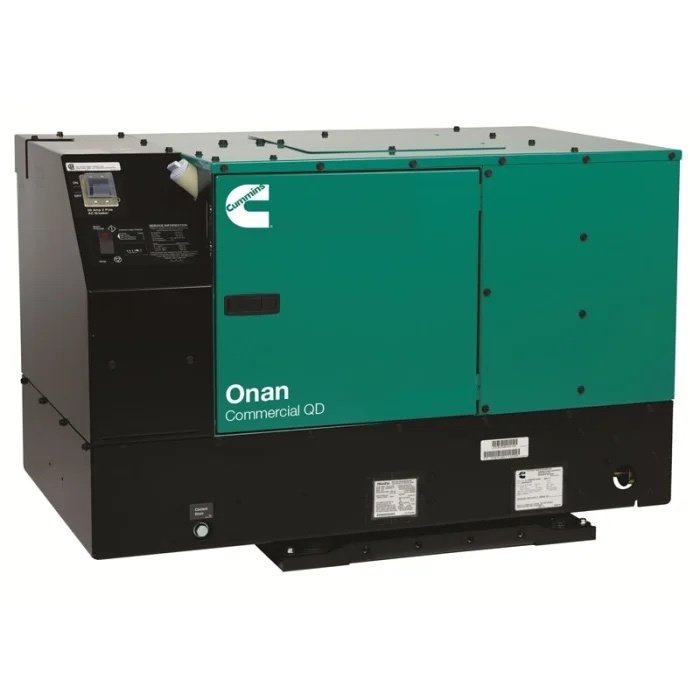
Commercial Generators · Santa Barbara
What A Commercial Generator Protects
Commercial generators sit between a home standby unit and a full industrial installation, and most South Coast businesses need less machine than they expect. A restaurant needs the walk-in, the line refrigeration, the point of sale, the hood and enough lighting to keep serving. A dental or medical office needs refrigerated medication, sterilizers, the server and the treatment room lighting. A hotel needs elevators, card access, egress lighting, the boiler controls and the front desk. A grocery or market needs refrigeration above almost everything else. In each case the right system is built around a short list of circuits rather than the entire building, which is how a project that sounded like six figures turns out to be a fraction of that. We install and service commercial standby systems from about 20kW to 500kW across Santa Barbara, Goleta, Carpinteria and the valley, and we handle the part most owners find hardest, which is the code side: emergency lighting, fire alarm panels, elevator recall and egress systems all carry legal backup requirements, and NFPA 110 expects those systems to be tested and documented on a schedule. Larger three-phase process loads move into industrial generator territory, and single-tenant buildings often work out closest to a backup power design.
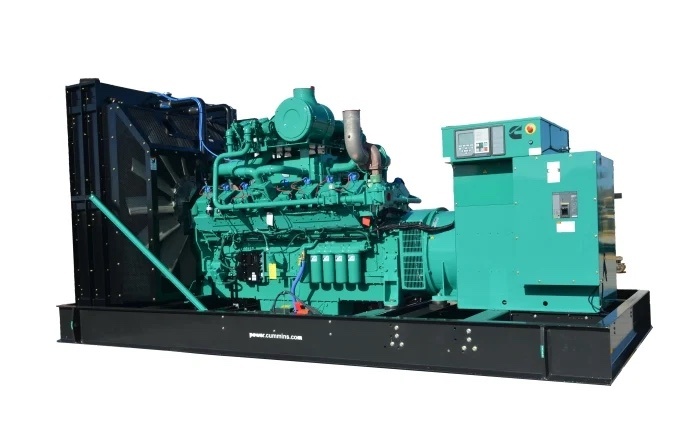
Why Businesses Use Us
The thing that separates commercial generator work from residential is that somebody will eventually audit it. Fire inspectors, health inspectors, insurers and, in medical settings, accreditation bodies all want to see that the standby system was tested and that there are records to prove it. We install with that in mind and we run the commercial generator maintenance contracts that keep the paperwork current, which is why our commercial customers tend to stay with us for years rather than shopping the service every renewal. We also work around your hours. Restaurants get their transfer switch tied in on a Monday morning rather than during Friday service, and offices get the noisy work done before opening. It is a small thing that most contractors never think about, and it is the difference between a project that costs you a day of trading and one that does not.
- Code-compliant emergency systems: egress lighting, alarm panels, elevator recall, with the testing schedule set up properly.
- NFPA 110 style monthly and annual testing with written records for inspectors, insurers and accreditation.
- Commercial generator maintenance contracts with scheduled visits, priority response and parts on the shelf.
- Work phased around trading hours, so tie-ins and shutdowns land outside your busiest windows.
- Critical-circuit design that puts the budget on refrigeration, life safety and revenue systems.
- One licensed contractor covering the electrical, the fuel and the commissioning rather than three you have to coordinate.
Reasons A Business Installs Standby Power
The trigger is usually one of these, and often two at once:
Refrigerated inventory is at risk
A restaurant walk-in, a market cold case, a pharmacy fridge or a wine inventory turns an outage into a write-off, often with a health department requirement to discard anything above temperature. Two bad events usually cost more than the system that would have prevented both.
Code requires an emergency system
Emergency egress lighting, fire alarm panels, elevator recall and smoke control in commercial buildings have backup requirements under the building and fire codes, and they have to be tested and logged. If an inspector has already written this up, the fix is a properly installed and documented standby system.
Downtime is revenue
A hotel with no elevators or card access is issuing refunds. A dental practice with a sterilizer mid-cycle is rescheduling a day of patients. Once you can put a number on an hour of closure, the payback period on a standby system is usually short enough to make the decision straightforward.
Data, security and access systems have to stay up
Servers, point of sale, security cameras, gates and card readers all fail unhelpfully in an outage, and some of them come back needing attention rather than restarting cleanly. Generators plus a UPS on the sensitive equipment covers both the gap and the duration.
The insurer or the lease says so
Business interruption cover and commercial leases increasingly reference backup capacity, and what they really require is evidence: a maintained system with a service record. We install and document to that standard because the alternative is a claim conversation nobody wants.
Public safety power shutoffs affect the area
Businesses inland and in the valley face planned shutoffs during fire weather, which arrive with notice and no flexibility. A standby system means you trade through the event while the block around you closes for the afternoon.
Send us a photo of the panel and a list of what has to stay live, and we will scope it before we ever visit. Call: (805) 572-7405
How A Commercial Install Works
Scoped around your trading hours from the first conversation onward.
1. Walkthrough and load list
We visit during a quiet period, go through the panel, identify the code-required emergency circuits separately from the business-critical ones, and price both so you can see what the legal minimum costs and what full coverage costs. Those two numbers are often much closer than owners expect.
2. Design, permit and scheduling
Unit selected, transfer switch and any subpanel designed, permits filed with the building and fire departments, and the schedule built around your calendar. Where a shutdown is needed we agree the window in advance and stick to it.
3. Installation and tie-in
Pad or roof mount, fuel connection, transfer switch, conductors and controls, with the disruptive elements done outside trading hours. Life safety integration is coordinated with your alarm and elevator contractors rather than assumed to be somebody else’s problem.
4. Testing, documentation and service plan
Full transfer test under real load, alarms proven, records started, staff shown the controls and the manual override, and the maintenance schedule set up. You get a document pack that satisfies an inspector rather than a folder of receipts.
Systems, Testing And Service Contracts
What commercial standby power involves once you get past the equipment:
Restaurants and food service
Refrigeration first, then the hood and makeup air, the point of sale, the lighting and the ability to actually keep serving. A 40kW to 60kW unit handles most independent restaurants comfortably. The health department requirement to discard product above temperature is what makes the arithmetic obvious after the first outage.
Medical, dental and veterinary
Refrigerated medication and vaccines, sterilizers that must complete their cycle, treatment lighting, imaging equipment and patient records. These sites tend to want a UPS on the sensitive equipment and a generator behind it, and they need documented testing for accreditation as well as for the fire inspector.
Hotels, retail and managed property
Elevators, card access, egress and stairwell lighting, gates, common area refrigeration and the front desk. The code-required emergency circuits are usually a smaller list than owners assume, and covering them well is far better value than trying to hold the whole building.
Emergency systems and code testing
Systems supporting life safety are expected to be exercised monthly under load and tested annually, with written records kept. That is the standard an inspector works to, and it is what our commercial generator service contracts are built around. The records matter as much as the maintenance.
Commercial generator maintenance contracts
Scheduled visits with oil and filter changes, coolant and battery testing, transfer switch exercise, fuel condition checks and an annual full-load test, plus priority response when something goes wrong. Details and pricing are on the generator maintenance page.
Roof and constrained sites
Downtown Santa Barbara buildings often have nowhere at grade to put a generator, which means roof mounting with structural review, crane access, vibration isolation and careful exhaust routing. It is a bigger project than a yard install and it is entirely doable. We will tell you early if the building will not take it.
Temporary power during works
Remodels, panel upgrades, utility shutdowns and generator replacements all leave a gap. A commercial generator rental with the right distribution keeps you trading through it, which is nearly always cheaper than closing.
What A Commercial Generator Costs
A small commercial standby system covering a critical-circuit list generally starts around $15,000 installed, a typical restaurant or medical office lands in the $25,000 to $60,000 range, and larger buildings go up from there. The variables:
- How much of the building is covered. Emergency circuits only is the cheapest compliant option; whole-building coverage costs considerably more and is rarely necessary.
- Single phase or three phase. Most commercial buildings here are three phase, which sets both the generator and the switchgear specification.
- Where it goes. A yard or parking area install is straightforward. A roof mount brings structural review, a crane, vibration isolation and exhaust routing.
- Fuel. Natural gas is the norm in town. Diesel needs a tank, containment and fire department review, and it is the right answer where the gas main is not dependable.
- Life safety integration. Tying into fire alarm, elevator recall and emergency lighting takes coordination and testing, and it is where a cheap quote usually turns out to have left something out.
- Service agreement. Monthly exercise and an annual documented test are an ongoing cost, and they are what keeps the system compliant and the warranty intact.
We price the code-required minimum and the full-coverage version side by side so the decision is yours rather than ours. Bigger process loads belong on the industrial generator page, temporary needs on the rental page, and the whole range of generator work we do in Santa Barbara is set out on the home page.
Frequently Asked Questions
What size generator does a restaurant or small business need?
Most independent restaurants are comfortable on 40kW to 60kW, which covers walk-in and line refrigeration, the hood and makeup air, point of sale, and enough lighting to keep trading. Offices and small retail often need far less. The number comes from a circuit-by-circuit list rather than from square footage, and we do that walkthrough before quoting anything.
Is a standby generator legally required for my building?
It depends on the occupancy. Emergency egress lighting, fire alarm panels, elevator recall and smoke control systems carry backup requirements under the building and fire codes, and in many buildings those are met with battery units rather than a generator. Larger assembly, healthcare and high-rise occupancies have stricter requirements. We will tell you what your building actually needs rather than selling you past it.
How often does a commercial generator need testing?
The accepted standard for emergency systems is a monthly exercise under load and an annual test at or near rated output, with written records kept. That is what a fire inspector, an insurer or an accreditation surveyor will ask to see. Our maintenance contracts run that schedule and keep the log, which is the part most businesses would rather not manage themselves.
Can you install without closing the business?
Almost always. The bulk of the work happens outside the building, and the only part that genuinely needs power off is the transfer switch tie-in, which is usually a few hours. We schedule that for your quietest window, early morning or a closed day, and where even that is impossible we bring in a rental unit so you stay open through it.
What does a commercial generator maintenance contract include?
Scheduled visits through the year covering oil and filter changes, coolant testing, battery load testing, fuel condition and polishing where needed, transfer switch exercise, control and alarm verification, and an annual full-load test. Contract customers get priority response and hold their place ahead of new calls during widespread outages, which is when it matters most.
Can a generator go on the roof?
Yes, and downtown it is often the only option. It needs a structural review of the roof, crane access for the lift, vibration isolation, careful exhaust routing away from intakes and operable windows, and a fuel strategy that works at height. It costs more than a ground installation and it is entirely routine work. We will tell you at the survey if the structure will not carry it.
Need power that stays on?
Tell us the property and what has to keep running, and we will come back the same day with a free estimate and a flat installed price.
Or call us now: (805) 572-7405